


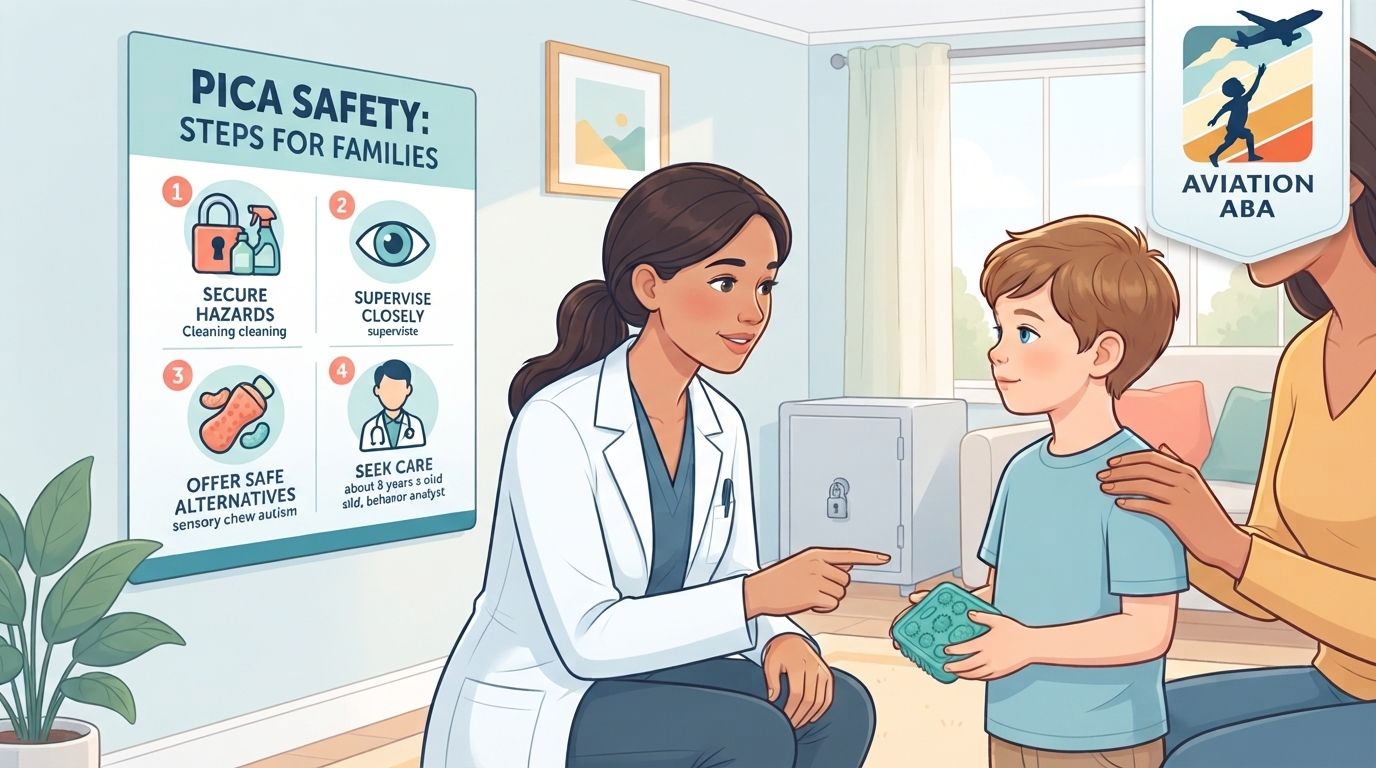
If your child is eating paper, dirt, hair, paint, soap, fabric, or other non-food items, it can feel scary and confusing. Pica in autism is more than “putting things in the mouth.” It can be a clinical concern when a child repeatedly eats non-food items in a way that is unsafe or not typical for their developmental stage.
Research on pica and related eating concerns highlights the need to look at both medical and behavioral factors, including safety risks and treatment planning, similar to how we address other core behaviors explored in our echolalia in Autism guide.
Key Takeaways
- Pica means repeated eating of non-food, non-nutritive items, and it should be taken seriously when it creates health or safety risks.
- Autistic children may engage in pica for sensory, medical, behavioral, or communication-related reasons.
- Medical causes, including iron deficiency, zinc deficiency, constipation, or gastrointestinal discomfort, should be ruled out.
- A Functional Behavior Assessment (FBA) can help identify why the behavior is happening.
- Caregivers should seek urgent medical help if a child swallows something sharp, toxic, magnetic, or likely to block the airway or intestines.
What Is Pica in Autism?
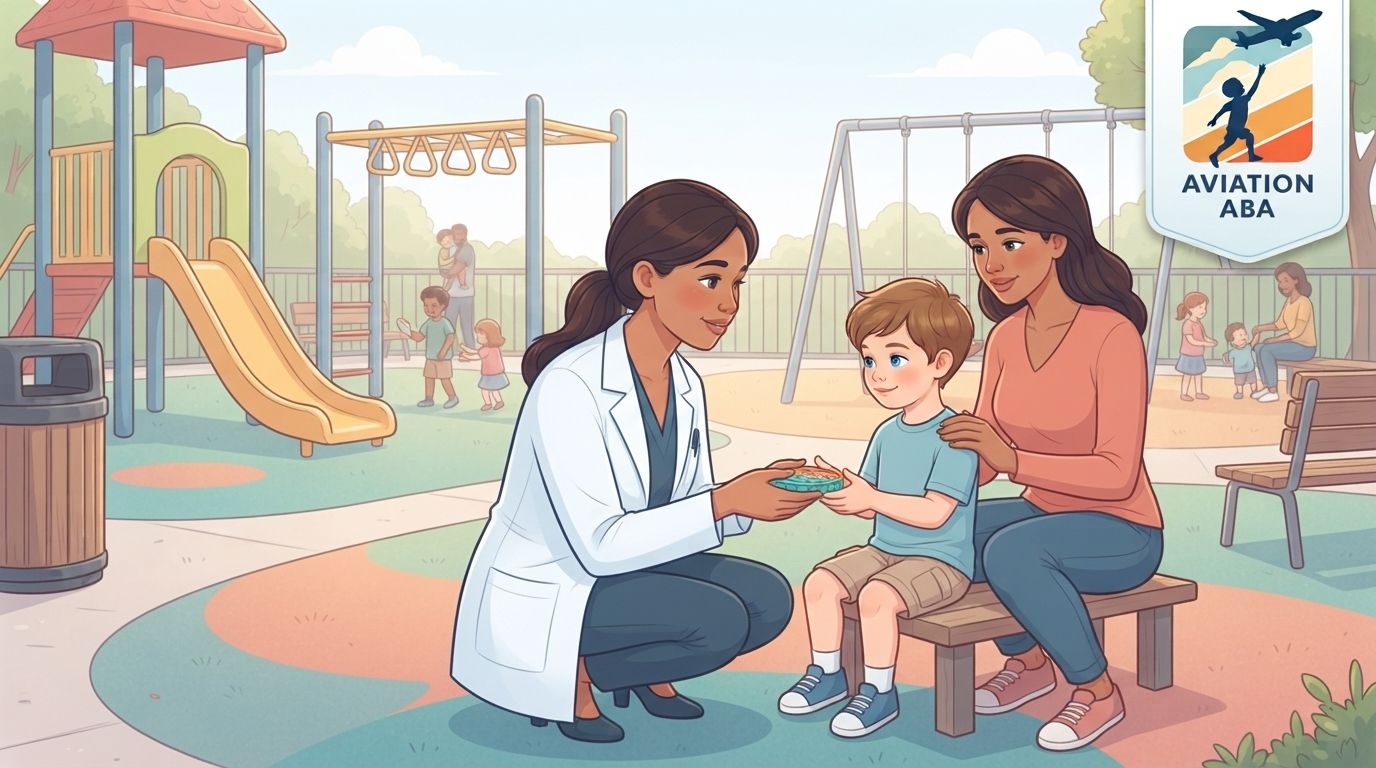
Clinically, pica involves persistent eating of non-food items for at least one month, at an age where this behavior is not developmentally expected. It is also not explained by cultural or social practices. When pica occurs alongside Autism Spectrum Disorder, the behavior still needs its own careful evaluation.
Research on pica and related eating concerns highlights the need to look at both medical and behavioral factors, including safety risks and treatment planning. You can find clinical discussion in this ScienceDirect review and related research in this Wiley article.
For a child, pica may look like chewing and swallowing paper, paint chips, dirt, small toys, clothing fibers, hair, soap, or feces. Some children mouth objects without swallowing them. That can still need support, but it is different from clinical pica because swallowing creates greater medical risk.
Why Medical Evaluation Comes First
Before assuming pica is “just behavioral,” it is important to check for medical causes. Some children eat non-food items because of nutritional deficiencies, especially iron deficiency or zinc deficiency. Others may have gastrointestinal health concerns, constipation, pain, or medication side effects that affect eating behavior.
A pediatrician may recommend blood testing protocols, nutrition review, stool testing, or referral to a specialist. This step matters because behavioral support works best when medical needs are not being missed.
Safety Risks Families Should Watch For
Pica can create serious risks, even when the item looks small or harmless. Common concerns include:
- Choking hazards from small objects, fabric, foam, or plastic.
- Poisoning from paint, cleaning products, batteries, plants, or chemicals.
- Gastrointestinal complications, including constipation, injury, or intestinal obstruction.
- Dental injury from chewing hard or sharp materials.
- Infection from soil, feces, or contaminated objects.
The National Autistic Society notes that managing pica often requires reducing access to unsafe items while also understanding the reason behind the behavior through careful observation and planning managing pica.
The National Autistic Society notes that managing pica often requires reducing access to unsafe items while also understanding the reason behind the behavior, much like the environmental modifications outlined in our article on head banging in autism.
Sensory Seeking or Clinical Pica?
Many autistic children explore the world through sensory input. Chewing a safe necklace, mouthing a toy, or seeking oral pressure may be sensory-seeking behavior. Clinical pica is more concerning when the child repeatedly swallows unsafe non-food items.
A helpful question is: “Is my child seeking oral input, or are they ingesting something that could hurt them?”
For example, a child who chews a silicone chew tool may need sensory support. A child who eats drywall, rocks, or strings from clothing needs medical and behavioral evaluation.
How an FBA Helps Treatment Planning
A Functional Behavior Assessment (FBA) looks at what happens before, during, and after pica. In simple terms, it helps the care team understand the “why.” Seattle Children’s also describes pica treatment as a process that often includes safety changes, replacement behaviors, and coordinated professional support, which you can read more about in our breakdown of In-Home ABA vs Telehealth ABA for Young Children.
Pica may happen because a child is:
- Seeking sensory input.
- Trying to escape a demand.
- Looking for attention.
- Responding to hunger, pain, or discomfort.
- Unable to communicate a need.
Applied Behavior Analysis (ABA) providers may use FBA results to build a safer, more individualized plan. Seattle Children’s also describes pica treatment as a process that often includes safety changes, replacement behaviors, and coordinated professional support pica treatment.
Behavioral Strategies That May Help
Behavior plans should be individualized, but common supports may include:
- Blocking access to unsafe items while keeping supervision calm and consistent.
- Teaching a safe replacement, such as using a chew tool or asking for a snack.
- Differential reinforcement, which means rewarding safer behavior while not reinforcing pica.
- Increasing communication supports so the child can ask for help, food, attention, or a break.
- Adjusting routines so high-risk times, like bedtime or transitions, are more predictable.
Every child’s needs are different, so these strategies should be guided by professionals who understand both autism and pica.
When to Seek Help Right Away
Please seek urgent medical care if your child may have swallowed something sharp, toxic, magnetic, battery-operated, or large enough to cause choking or blockage. Also call your child’s doctor if pica is new, increasing, or paired with vomiting, stomach pain, blood in stool, severe constipation, fatigue, or weight changes.
A good next step is to contact your pediatrician and ask about medical screening, then connect with a behavior specialist for an FBA. With the right team, families can build a plan that protects safety while also supporting the child’s sensory, communication, and daily living needs.
References
- National Library of Medicine: Pica, Autism, and Other Disabilities
- National Library of Medicine: Functional Analysis and Treatment of Pica on a Preschool Playground

Sarah McConkie is a Board Certified Behavior Analyst and Clinical Director at Aviation ABA with years of experience supporting children and families through individualized ABA therapy. She has worked across multiple clinical settings, conducting behavioral assessments, developing treatment plans, and supervising therapy teams to help children build important everyday skills. Sarah is passionate about creating supportive, relationship-focused care that helps children feel comfortable, confident, and successful in their daily lives.
