



Flying with an autistic child can feel like a lot to plan, especially when airports, security lines, crowds, waiting, and cabin noise are all part of the day. The good news is that many families can make air travel feel more predictable with preparation, sensory supports, and a clear recovery plan., which makes flying with autistic child easier!
Key Takeaways
- Start preparing before travel day with social stories, visual schedules, and short practice runs.
- Contact TSA Cares before your flight and bring helpful medical documentation.
- Pack sensory tools such as noise-canceling headphones, comfort items, snacks, and calming activities.
- Toddlers, school-age children, and teenagers may need different types of support.
- Plan for decompression after the trip, not just the flight itself.
Before the Flight: Make the Trip Predictable
Many autistic children feel more comfortable when they know what will happen next. A social story can walk your child through each part of the airport experience: driving to the airport, checking bags, going through security, waiting at the gate, boarding, sitting on the plane, and landing.
A visual schedule can also help your child see the day in smaller steps. You might use pictures, written words, or a simple checklist, depending on your child’s age and communication style. If your child is learning to respond to new cues in different settings, this guide to stimulus control transfer may help explain why practice across places can matter.
Dress rehearsals can make unfamiliar routines feel much more manageable. Visiting the terminal ahead of time, watching videos of aircraft, or practicing security checkpoints at home helps build confidence before the actual travel day.
Everyone uses self-regulatory movements differently when managing excitement or stress. Learning more about stimming without autism highlights how common these natural coping mechanisms are across many different neurodivergent experiences, allowing family members to practice and prepare together comfortably.
Airport Security, TSA Cares, and Boarding
Before your trip, consider contacting TSA Cares. TSA Cares can help connect families with Passenger Support Specialists, who may offer extra support during the screening process. This does not remove all security requirements, but it can make the process feel less confusing.
Bring simple medical documentation if your child may need accommodations. This might include a doctor’s note, diagnosis documentation, or a short written explanation of communication needs, sensory sensitivities, or safety concerns.
Planning around travel stressors and support needs helps families navigate trips with greater ease. Understanding the ASD and family airport experience allows parents to anticipate challenges and prepare effectively before leaving home.
It can also help to prepare:
- Emergency contact methods, such as a card with parent phone numbers.
- A plan for waiting in crowded areas.
- Knowledge of any sensory-friendly zones at the airport.
- A decision about early boarding, since some children like settling in early while others do better with less time on the plane.
During the Flight: Support Sensory Regulation
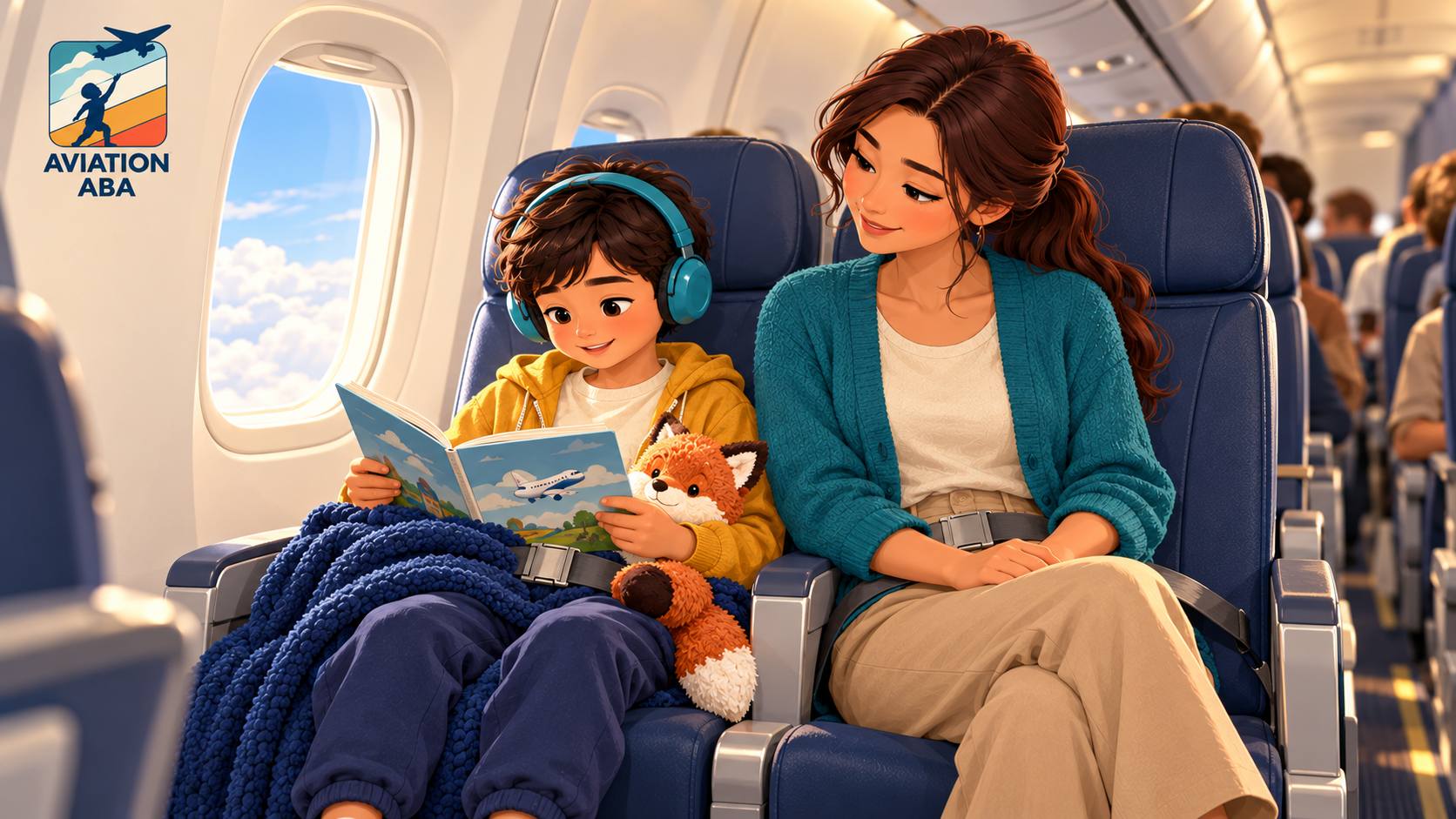
The airplane can bring loud sounds, close seating, bright lights, and changes in pressure. Noise-canceling headphones, sunglasses, chewable jewelry, fidgets, weighted lap pads, and familiar comfort items may help your child regulate. Some children also use movement or hand motions to manage sensory input, which can be catered to by getting them some squishies or soft toys to play with during the flight.
Age-Appropriate Strategies for Toddlers and Teenagers
Toddlers often need simple, immediate supports. Think snacks, comfort objects, short visuals, favorite toys, and frequent reassurance. They may not understand delayed rewards, so keep expectations small and concrete.
Teenagers may want more privacy and control. You can involve them in packing, choosing headphones, reviewing the schedule, or deciding how to ask for a break. Some teens may prefer written plans or phone reminders instead of parent prompts.
Every child is different, so the goal is not to make travel perfect. The goal is to make it more understandable and manageable. Navigating new environments becomes much smoother when utilizing available terminal accommodations. Knowing more about airport accessibility ensures that autistic children and their families can move through security and boarding with less stress.
Long-Haul Flights and Sleep Challenges
Long-haul flights can be harder because of confinement, time changes, and disrupted sleep cycles. If possible, choose flight times that match your child’s natural sleep rhythm. Bring familiar bedtime items, such as pajamas, a blanket, or a small pillow.
For longer flights, plan movement breaks when safe. Walking to the restroom, stretching in the aisle, or doing quiet seated exercises can help reduce restlessness. Keep meals, medication schedules, and calming routines as consistent as possible. Screens can be useful during flights, especially when used with a clear plan. Download favorite shows, games, or communication apps before leaving home. If you are thinking about screen limits during travel, this guide to autism and screen time may help you balance comfort and routine.
After Landing: Decompression and Returning Home
Travel does not end when the plane lands. Many children need quiet time after the sensory load of flying. Build in post-travel recovery with low-demand activities, familiar foods, and extra transition time.
Once you are home, gently return to regular routines: sleep, meals, school, therapy, and play. If travel led to major changes in screen use or behavior, this overview of virtual autism can help you understand the term while still checking with a professional for individualized guidance.
A thoughtful travel plan will not remove every hard moment, but it can give your child more predictability and give you more confidence. Start small, prepare what you can, and leave room for recovery afterward.
References
- National Library of Medicine: Light and sound hypersensitivity in autism spectrum disorder
- National Library of Medicine: What do we know about travel for children with special health care needs? A review of the literature
- PubMed: Virtual Reality Air Travel Training Using Apple iPhone X and Google Cardboard: A Feasibility Report with Autistic Adolescents and Adults
- PubMed: Virtual Reality Air Travel Training with Children on the Autism Spectrum

Sarah McConkie is a Board Certified Behavior Analyst and Clinical Director at Aviation ABA with years of experience supporting children and families through individualized ABA therapy. She has worked across multiple clinical settings, conducting behavioral assessments, developing treatment plans, and supervising therapy teams to help children build important everyday skills. Sarah is passionate about creating supportive, relationship-focused care that helps children feel comfortable, confident, and successful in their daily lives.
