



Choosing an ABA therapy setting can feel like a big decision, especially when each option sounds helpful in a different way. Clinic-based ABA, in-home ABA, and school-based ABA can all support children with autism, but the best fit depends on your child’s needs, your family routines, and the goals your care team is working toward. Let’s learn all about the ABA therapy settings comparison and more.
Key Takeaways
- There is no single “best” ABA setting for every child. The right choice depends on learning needs, social goals, behavior support needs, and daily routines.
- Clinics often offer more structure and peer opportunities, while home-based care supports real-life routines.
- School-based ABA can help children use skills during academic and classroom activities.
- A Board Certified Behavior Analyst (BCBA) should guide the treatment plan, while Registered Behavior Technicians (RBTs) often provide direct day-to-day therapy.
- Families may need to transition between settings as a child grows, builds skills, or needs different types of support.
ABA Therapy Settings Comparison With Each Other
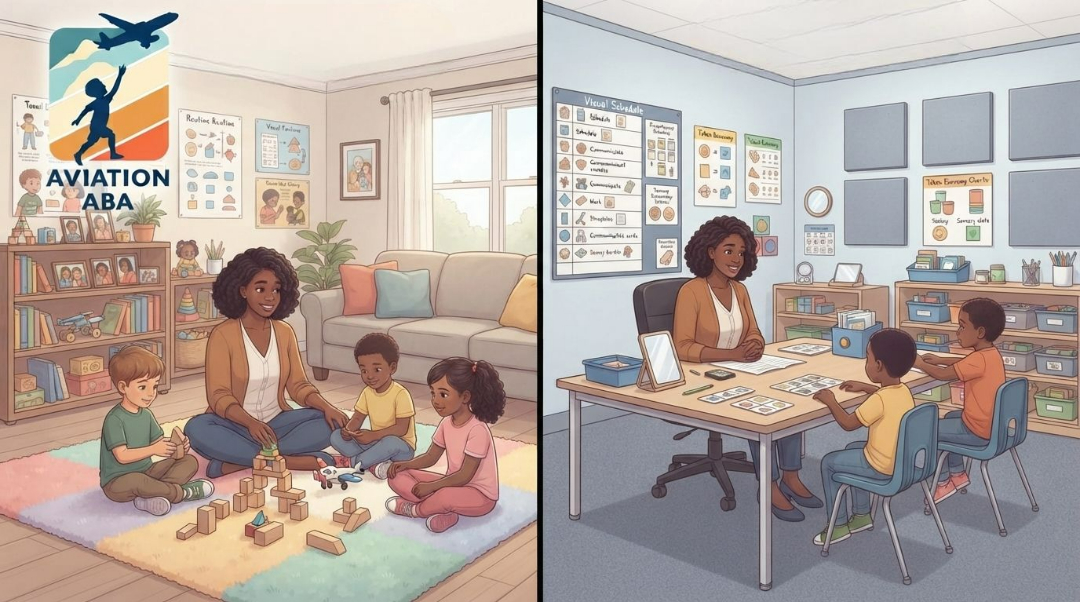
Applied behavior analysis (ABA) uses learning principles to help children build meaningful skills and reduce behaviors that interfere with learning or daily life. Research on behavioral and developmental approaches, including naturalistic models, highlights the value of teaching skills in meaningful contexts, as discussed in this NDBI research review. If you’re learning about naturalistic teaching, this guide to NDBI can also help explain how child-led learning may fit into therapy.
The setting matters because children do not only need to learn a skill. They also need to use it across people, places, and routines. This is called skill generalization.
Clinic-Based ABA
Clinic-based ABA may be a good fit when a child benefits from clear structure, fewer distractions, and access to therapy materials in one place. Clinics may also offer chances for social development through peer interaction, group activities, or shared play when appropriate.
This setting can be helpful for children who need focused teaching around communication, play, safety, transitions, or pre-academic readiness. A BCBA designs and monitors the plan, while an RBT may work directly with your child during sessions.
The tradeoff is that clinic skills still need to carry over into home, school, and community life. Families can ask the BCBA how the team will help practice new skills outside the clinic.
In-Home ABA
In-home ABA happens where many daily challenges naturally occur. For many families, this can include getting dressed, brushing teeth, mealtimes, sibling play, or bedtime routines.
This setting can be especially useful when goals are tied to family routines or when parents want coaching in the moment. For example, a therapist may help your child practice asking for help during snack time or tolerating a change in the morning routine.
If you’re comparing service models for younger children, this guide on in-home ABA may help you think through the practical differences.
School-Based ABA
School-based ABA focuses on helping children use skills in the classroom or school environment. This may include following group instructions, transitioning between activities, asking for breaks, participating with peers, or completing academic routines.
School-based support can be helpful when your child’s main challenges appear during classroom expectations. It also supports academic integration, which means helping therapy goals connect to school participation.
If school support is part of your child’s plan, this overview of school-based ABA explains what that can look like in practice.
How to Choose the Right ABA Setting
A professional evaluation can help clarify which setting best matches your child’s current needs. If you are still early in the process, an autism evaluation can give families a clearer starting point.
Helpful questions to ask include:
- Where does my child struggle most right now?
- Does my child need more structure or more real-life practice?
- Are social opportunities a major goal?
- Do behaviors happen more often at home, school, or in new places?
- How will the BCBA measure progress across settings?
- Will insurance authorize the recommended setting and number of hours?
Insurance coverage can vary by plan and by setting. Some plans may require documentation of medical necessity, treatment goals, provider credentials, or prior authorization. A dissertation on ABA service delivery also points to the importance of implementation setting and provider collaboration in treatment access and delivery, which families can explore through this service delivery research.
Transitioning Between Settings
Your child may not stay in one setting forever. That is normal.
A child might begin in a clinic for structure, add home sessions for routine practice, or receive school-based support when classroom goals become more important. A thoughtful transition usually includes:
- A BCBA reviewing current progress and new needs.
- Practice in the new setting before fully switching.
- Parent and provider communication.
- Shared goals across home, clinic, and school.
- A plan for maintaining skills already learned.
Stories of progress can also help families picture how support may change over time. You can explore family progress stories for examples of how growth can look different for each child.
A Gentle Next Step
Clinic, home, and school-based ABA each have strengths. The right setting is the one that helps your child learn meaningful skills and use them where they matter most.
If you’re unsure, start by asking what your child needs right now, where those needs show up most often, and how the therapy team will help skills carry over into everyday life. A good plan can grow with your child, one step at a time, and can help you figure out the ABA therapy settings comparison.
References

Sarah McConkie is a Board Certified Behavior Analyst and Clinical Director at Aviation ABA with years of experience supporting children and families through individualized ABA therapy. She has worked across multiple clinical settings, conducting behavioral assessments, developing treatment plans, and supervising therapy teams to help children build important everyday skills. Sarah is passionate about creating supportive, relationship-focused care that helps children feel comfortable, confident, and successful in their daily lives.
