


Choosing between one-on-one in-home ABA and group clinic sessions can feel like a big decision, especially when both settings may offer real support for your child. The best fit usually depends on your child’s goals, comfort level, age, social needs, daily routines, and insurance requirements.
Key Takeaways
- In-home ABA therapy can be helpful for practicing daily living skills in your child’s natural environment.
- Clinic-based ABA therapy may offer more structure, peer interaction, and opportunities for group social practice.
- A BCBA designs and supervises the treatment plan, while an RBT often works directly with your child during sessions.
- Many children benefit from a hybrid therapy model that combines home and clinic support.
- Insurance coverage can vary by setting, so families should confirm authorization details before starting.
How the Therapy Setting Affects Skill Building
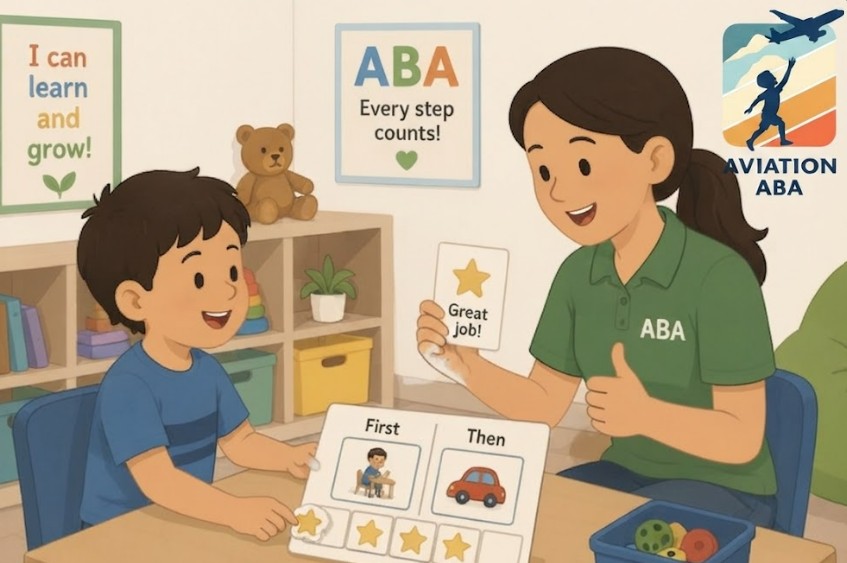
In-home ABA therapy happens where your child already spends much of their day. This can make it easier to work on Activities of Daily Living, often called ADLs, such as getting dressed, brushing teeth, following mealtime routines, or transitioning between activities.
This setting also supports natural environment training, which means skills are taught during real-life routines instead of only at a table or in a therapy room. For example, a child learning to request help can practice that skill during snack time, playtime, or bedtime routines.
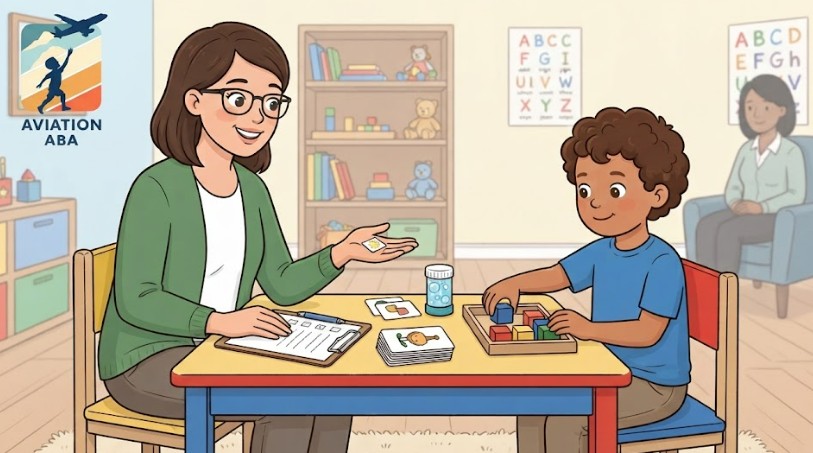
Clinic-based ABA therapy offers a more structured environment. A clinic may have therapy rooms, learning materials, group activities, and planned peer opportunities.
One-on-One Support vs Peer Interaction
One-on-one in-home ABA gives your child focused attention from the therapy team. This can be helpful when goals are very individualized, when a child needs support with home routines, or when the family wants coaching in the moment.
Group clinic sessions may offer something home sessions cannot always provide: regular peer interaction. Practicing greetings, turn-taking, waiting, sharing materials, or joining group play can support social skills development in a more natural peer setting.
Every child is different. Some children need quiet, familiar surroundings before they are ready for group learning. Others may be ready to practice skills around peers sooner.
The Role of BCBAs and RBTs in Each Setting
A Board Certified Behavior Analyst, or BCBA, assesses your child’s needs, creates the treatment plan, sets goals, and supervises care. A Registered Behavior Technician, or RBT, typically provides direct therapy under BCBA supervision. If you are still learning the difference, this guide to RBT vs BCBA can help explain each role clearly.
In a home setting, the BCBA may focus heavily on routines, family priorities, and generalization of skills across daily life. In a clinic, the BCBA may also build goals around structured learning, peer play, group readiness, and transitions.
If your child shows behaviors such as repetitive movements or unusual hand positioning, it may also help to understand related signs in context. This article on autism hand posturing offers more background for families who want to learn more.
Helping Skills Carry Over Between Home and Clinic
Generalization of skills means your child can use a skill in more than one place, with more than one person, and during more than one routine. This matters because a child might learn a skill in therapy but still need help using it at home, school, or in the community.
Helpful strategies include:
- Practicing the same skill with different people.
- Using similar language across home and clinic.
- Sharing progress updates between parents, BCBAs, and RBTs.
- Choosing goals that connect to real family routines.
- Slowly introducing new settings when your child is ready.
When a Hybrid Therapy Model May Help
A hybrid therapy model combines in-home ABA and clinic-based ABA. This can give your child the comfort of home-based learning while also creating chances to practice social, communication, and group-readiness skills in a clinic.
A child might use home sessions for dressing routines, toileting support, mealtime goals, or parent coaching. Clinic sessions might focus on peer play, structured learning, classroom-like routines, or social communication.
Families exploring both options may also find this guide to home vs center ABA helpful when thinking through setting fit.
Insurance and Authorization Questions to Ask
Insurance coverage can vary based on diagnosis, medical necessity, provider network, treatment hours, and therapy setting. Some plans may authorize home-based care, clinic-based care, or a mix of both. Others may require updated assessments or specific documentation before approving a change in setting.
Before starting, ask:
- Does my plan cover both in-home and clinic-based ABA?
- Are there limits on hours by setting?
- Does switching settings require a new authorization?
- Will parent training be covered?
- Who helps submit documentation and follow up with insurance?
Getting these answers early can prevent stress later.
How to Think About Transitions Over Time
Your child’s best therapy setting may change with age, progress, and goals. A younger child may begin at home to build comfort and daily routines. Later, clinic sessions may help with peer interaction, group learning, and school readiness.
A helpful transition framework is:
- Start with current needs. Look at safety, communication, daily routines, and comfort.
- Review progress with the BCBA. Ask which goals are ready for a new setting.
- Introduce change slowly. Add clinic or home sessions gradually when possible.
- Watch for generalization. Make sure skills are showing up across settings.
- Adjust as needed. The plan should grow with your child.
You do not need to choose perfectly on day one. The right team can help you understand which setting fits now and when it may be time to adjust.
References
- PubMed: A Program Evaluation of Home and Center-Based Treatment for Autism Spectrum Disorder
- PubMed: Applied behavior analytic intervention for autism in early childhood

Sarah McConkie is a Board Certified Behavior Analyst and Clinical Director at Aviation ABA with years of experience supporting children and families through individualized ABA therapy. She has worked across multiple clinical settings, conducting behavioral assessments, developing treatment plans, and supervising therapy teams to help children build important everyday skills. Sarah is passionate about creating supportive, relationship-focused care that helps children feel comfortable, confident, and successful in their daily lives.
