



Getting ready for your child’s first in-home ABA therapy session can feel a little strange at first. Your home is where your family relaxes, plays, eats snacks, and handles real life, and now a therapist is coming into that space to support learning.
The good news is that you do not need a perfect home. You need a safe, comfortable, flexible space where your child can build trust, practice skills, and feel supported.
Key Takeaways
- You do not need a separate therapy room. A small, consistent therapy zone is enough.
- The first session often focuses on rapport building, observation, and a clinical assessment.
- Siblings and pets should have a plan so the session feels calm and safe.
- Sensory comfort matters, but the space should still allow your child to practice real-life skills.
- A simple cleanup routine helps your home feel like home again after therapy.
Start With a Simple Therapy Zone
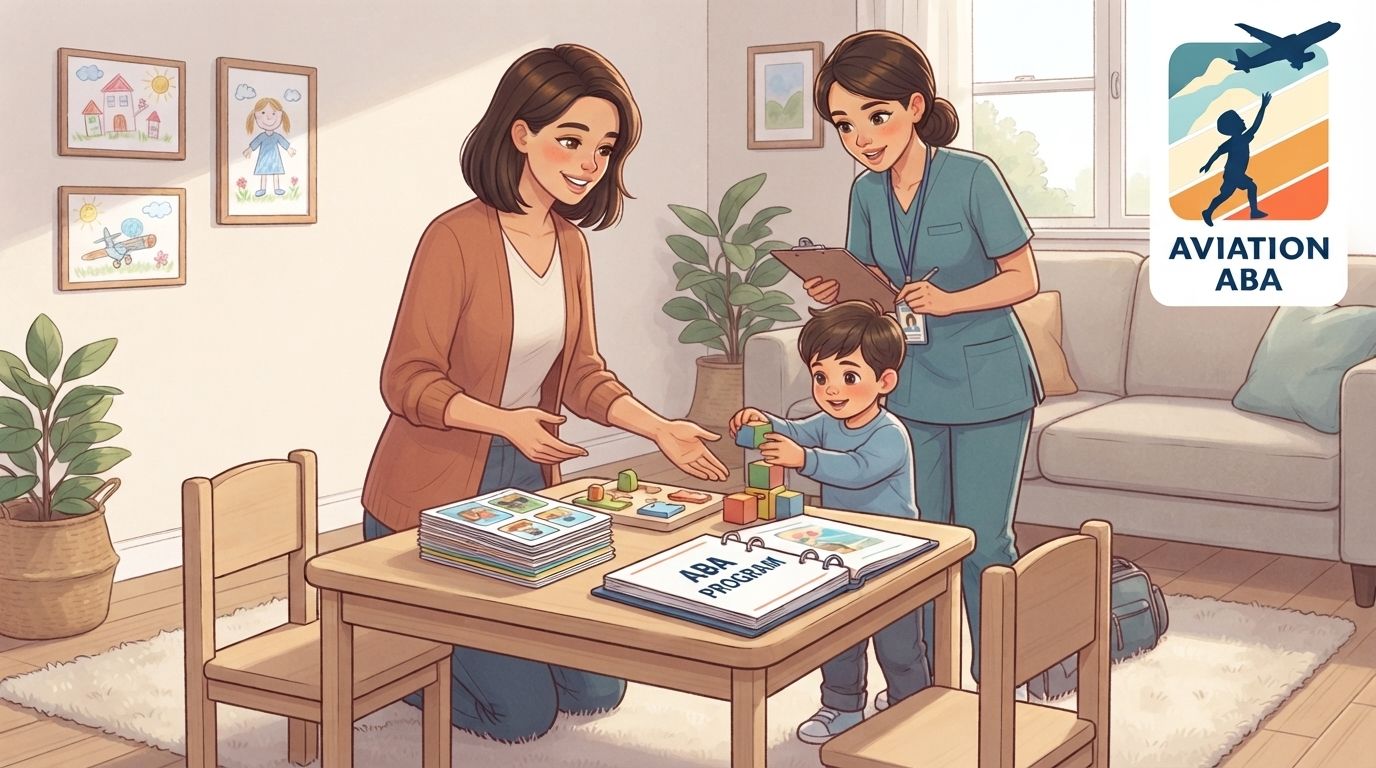
A therapy zone is just a small area where your child and therapist can sit, play, and work together. This could be part of the living room, a corner of the dining area, or a spot near a toy shelf.
Try to include:
- A small table or open floor space.
- A few favorite toys or comfort items.
- Basic supplies like crayons, books, puzzles, or blocks.
- A bin or basket for therapy materials.
- Enough room for movement if your child needs breaks.
If you live in an apartment or shared space, choose a zone that can be packed away quickly. A rolling cart, lidded bin, or foldable mat can make a small space work well.
Your child’s needs may also shape the setup. Children with Level 1 autism may need help with flexibility, transitions, or social communication, while children with Level 2 autism may need more structure and support during learning activities.
Prepare Your Child Emotionally
Before the first visit, explain what will happen in simple language. You might say, “A helper is coming to play with you and learn what helps you.”
The first session may include a clinical assessment, but that does not mean your child has to perform. The therapist may observe play, communication, routines, and responses to directions. A behavior interventionist may also spend time getting to know your child before asking for more structured tasks.
To reduce anxiety, you can:
- Show your child where the session will happen.
- Keep the explanation short and positive.
- Let your child choose one comfort item.
- Avoid promising exactly what will happen, since the therapist may adjust based on your child’s mood.
Balance Sensory Needs With Learning
A calm sensory environment helps many children feel more available for learning. This might mean lowering background noise, turning off the television, dimming harsh lights, or offering a movement break during in-home ABA session prep.
At the same time, in-home ABA therapy often uses real routines, not only tabletop work. Your child may practice asking for help during snack, cleaning up toys, or following a bathroom routine. This style connects closely with naturalistic teaching, where learning happens during everyday activities.
The goal is not to remove every distraction. It is to create enough comfort that your child can participate while still learning skills they can use in daily life.
Make a Plan for Siblings and Pets
Siblings are part of home life, but they can make the first session busy. If possible, give siblings a simple plan before the therapist arrives.
You might set them up with:
- A quiet activity in another room.
- A clear “check-in time” after the session.
- A special job, such as helping clean up later.
- A reminder that therapy time is for their sibling’s learning.
Pets may also need support. Even friendly pets can distract a child or therapist. Consider using a gate, crate, leash, or separate room during the session, especially at the beginning.
Transition Back to Home Life After the Session
When therapy ends, your home should not feel like a clinic took over your living room. A short reset routine can help everyone shift back into the perfect in-home ABA session prep.
Try this simple pattern:
- Put therapy materials back in one bin.
- Return furniture to its usual place.
- Offer your child a predictable after-session activity.
- Share one calm note, such as “Therapy is done. Now it is family time.”
This transition is especially helpful for children who struggle when activities end.
Keep Materials Organized Over Time
As your child’s goals change, therapy materials may change too. A monthly check-in can keep clutter from growing.
You can:
- Label bins by activity, such as communication, play, or self-care.
- Remove toys that are no longer being used.
- Keep high-interest items out of reach if the therapist uses them for motivation.
- Ask the therapist what should stay available between sessions.
A little organization now can make future sessions smoother, especially as routines become more familiar. Research on home-based intervention and learning environments, including these ResearchGate entries on home-based intervention and the home environment, also points to the home setting as an important part of how children experience support.
Common Preparation Mistakes
One common mistake is trying to make the home too perfect. Your therapist expects real family life. Another is putting away every toy or sensory item, which may remove tools your child uses to feel comfortable.
It can also be hard when parents try to lead the whole session. Staying nearby is helpful, but the therapist also needs time to build rapport with your child.
A good first goal is simple: create a safe, welcoming space, prepare your child gently, and stay open to feedback. With time, a solid in-home ABA session prep can become part of your child’s support system, not another source of stress.
References
- ResearchGate: Applied Behavior Analysis in Children and Youth with Autism Spectrum Disorders: A Scoping Review
- National Library of Medicine: Family-Centric Applied Behavior Analysis Facilitates Improved Treatment Utilization and Outcomes

Sarah McConkie is a Board Certified Behavior Analyst and Clinical Director at Aviation ABA with years of experience supporting children and families through individualized ABA therapy. She has worked across multiple clinical settings, conducting behavioral assessments, developing treatment plans, and supervising therapy teams to help children build important everyday skills. Sarah is passionate about creating supportive, relationship-focused care that helps children feel comfortable, confident, and successful in their daily lives.
