


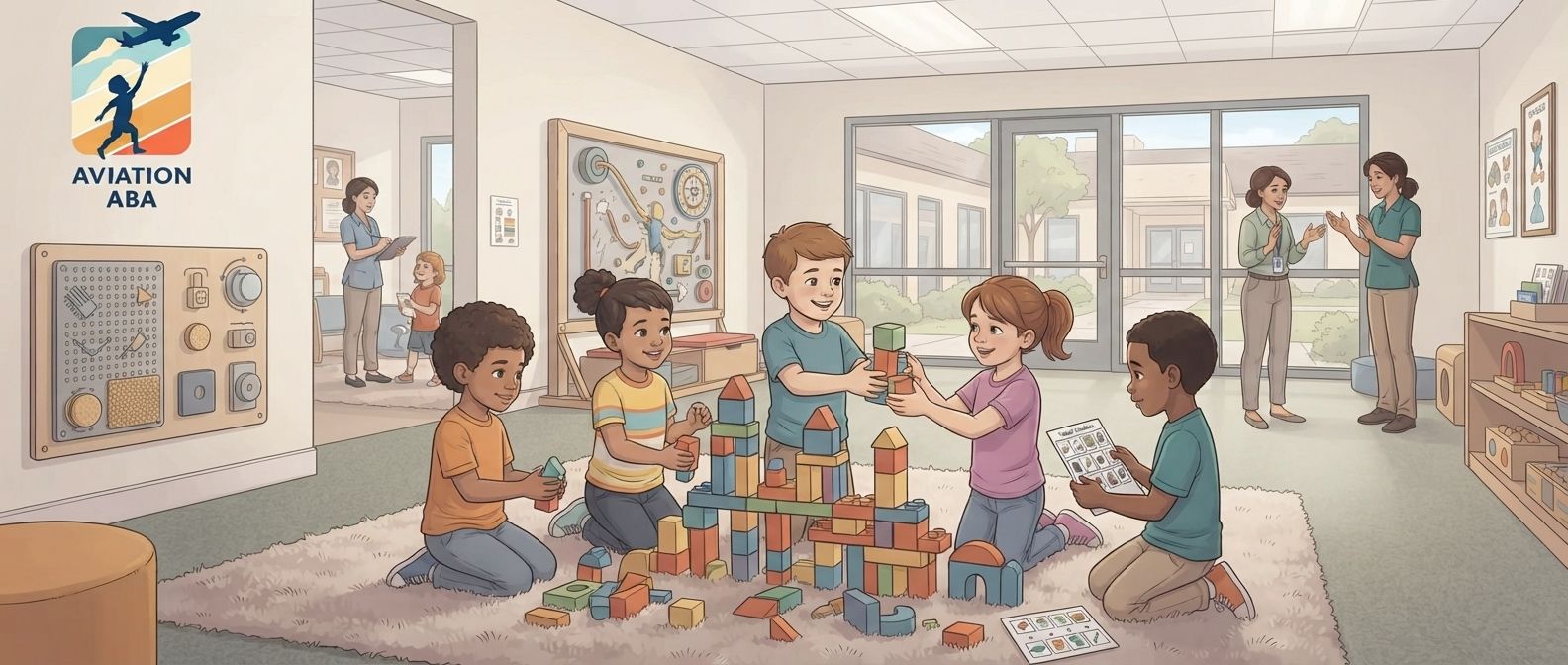
If your child struggles to join play, share space with other children, or handle the back-and-forth of friendship, clinic-based ABA can offer something that is hard to recreate at home: regular, supported peer practice. Research on autism social interventions often points to structured teaching, repeated practice, and generalization across settings as important parts of social growth, including in peer-focused research and broader social skills research.
This guide is for parents comparing clinic-based ABA with in-home support and wondering which setting may help their child build more meaningful ABA peer socialization and relationships. Let’s see just why clinic-based ABA helps kids build peer bonds and lasting friendships.
Key Takeaways
- Clinic-based ABA gives children more chances to practice social skills with peers in a supported setting.
- In-home ABA is often helpful for family routines, daily living skills, and one-on-one learning.
- Real peer relationships are more than following social rules. Children also need choice, comfort, shared interests, and emotional connection.
- Some children may feel tired or overstimulated in a clinic, so readiness matters.
- A Board Certified Behavior Analyst (BCBA) can help decide whether clinic-based, in-home, or blended support fits your child best.
How Clinic-Based ABA Supports Peer Relationships
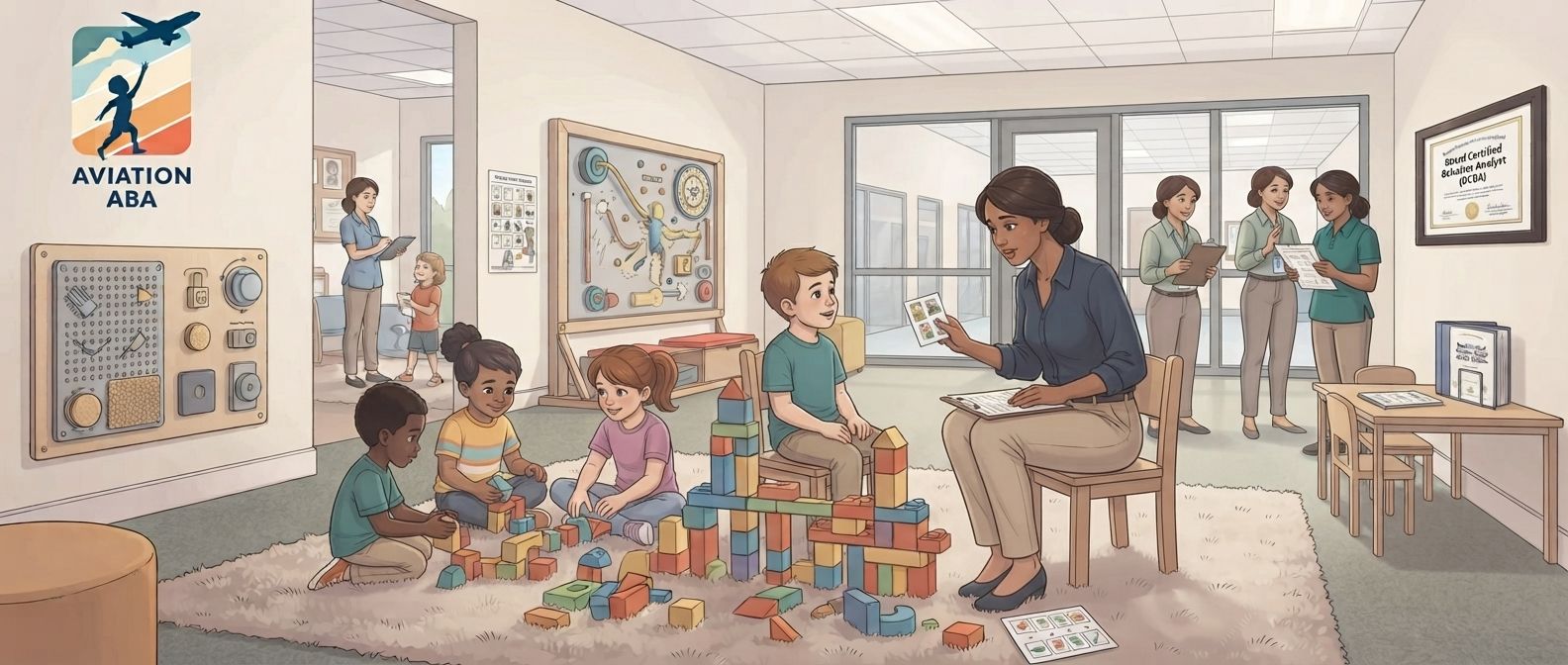
Clinic-based Applied Behavior Analysis (ABA) gives children a structured place to practice social skills with other children nearby. This may include greeting a peer, taking turns, asking to join play, waiting, losing a game, solving a disagreement, or noticing another child’s feelings.
A BCBA usually designs the therapy plan, while Registered Behavior Technicians (RBTs) help carry out daily sessions. In a clinic, the team can set up safe, planned peer interactions instead of waiting for social moments to happen by chance.
This is especially helpful for generalization of skills, which means using a skill in more than one place, with more than one person. For example, a child may learn to request a toy with a therapist, then practice that same skill with a peer during play. Natural Environment Teaching can support this kind of learning because it uses real interests and everyday moments, not only table-based drills. You can learn more about naturalistic teaching if your child learns best through play and routine to help better their ABA peer socialization.
Clinic-Based ABA vs. In-Home ABA
Both models can be helpful, but they support different needs.
Clinic-based ABA often offers:
- Structured peer interaction
- Practice with group routines
- School readiness opportunities
- Access to varied toys, activities, and therapy materials
- More chances to work on social norms, such as waiting, sharing, and joining a group
In-home ABA often supports:
- Morning, bedtime, and mealtime routines
- Parent coaching in the family’s real environment
- Daily living skills, such as dressing or brushing teeth
- Reducing challenges that happen mostly at home
- One-on-one support with fewer distractions
For many children, the best plan is not one setting forever. It may be clinic-based, in-home, or a mix depending on goals, energy level, and family schedule.
Real Friendship Is More Than Social Compliance
One important point for parents: a child can learn to follow a social rule without forming a real relationship.
Social compliance may look like saying “hi,” taking turns, or sitting near peers because an adult prompted it. Those are useful skills, but authentic peer relationships also involve shared enjoyment, choice, trust, and interest.
A strong clinic program should not only ask, “Did the child complete the social behavior?” It should also ask:
- Did the child seem comfortable?
- Did the child show interest in the peer?
- Was there shared play or shared attention?
- Could the child say no or ask for a break?
- Did adults reduce prompts over time?
This matters because friendship should not feel like a performance. The goal is to help children connect in ways that are meaningful for them.
How Clinics Teach Conflict Resolution and Social Navigation
Peer interaction can be joyful, but it can also be tricky. Children may grab toys, misunderstand rules, become upset when losing, or feel left out.
Clinics may use evidence-based teaching tools such as:
- Role-playing a hard moment before it happens
- Social stories to explain what to expect
- Video modeling to show a skill visually
- Shaping, which means building a skill in small steps over time
- Practicing repair phrases, such as “Can I have a turn?” or “I need space.”
If your child is learning a new social behavior gradually, shaping in ABA can be a helpful concept to understand.
When Clinic-Based ABA May Be Too Much
Clinic-based therapy is not automatically the right fit for every child. Some children become overwhelmed by noise, lights, transitions, or the energy of other children.
Signs your child may need extra support include:
- Covering ears often
- Trying to leave the room
- Increased meltdowns after sessions
- Trouble recovering from group activities
- Refusing to enter the clinic
Good clinics should plan for sensory-friendly environments. This may include quiet spaces, visual schedules, movement breaks, reduced noise, and gradual exposure to group settings.
Logistics matter too. Travel time, missed naps, sibling schedules, and insurance questions can all add stress. If coverage is part of your decision, you may want to review whether Medicaid covers ABA or how Blue Cross Blue Shield may handle ABA benefits.
A Simple Readiness Framework for Parents
Before choosing group-based clinic support, ask:
- Can my child tolerate short periods near other children?
- Does my child have a way to communicate wants, discomfort, or refusal?
- Can my child recover with support after frustration?
- Are sensory needs understood and accommodated?
- Are peer goals focused on connection, not just compliance?
- Will the clinic and family communicate often?
If several answers are “not yet,” that does not mean clinic-based ABA is off the table. It may mean your child needs a slower transition, shorter sessions, or more one-on-one preparation first, which is why clinic-based ABA helps kids build peer bonds.
Final Thoughts
Clinic-based ABA can help children practice social skills in a structured, supportive setting with real peers. For some children, that peer practice becomes an important bridge to school, playdates, and community activities.
The best choice depends on your child’s communication, sensory needs, readiness, and family routine. A thoughtful ABA team can help you decide whether clinic-based therapy, in-home therapy, or a blended plan gives your child the safest and most meaningful path toward connection, and building a strong ABA peer socialization.
References

Sarah McConkie is a Board Certified Behavior Analyst and Clinical Director at Aviation ABA with years of experience supporting children and families through individualized ABA therapy. She has worked across multiple clinical settings, conducting behavioral assessments, developing treatment plans, and supervising therapy teams to help children build important everyday skills. Sarah is passionate about creating supportive, relationship-focused care that helps children feel comfortable, confident, and successful in their daily lives.
