


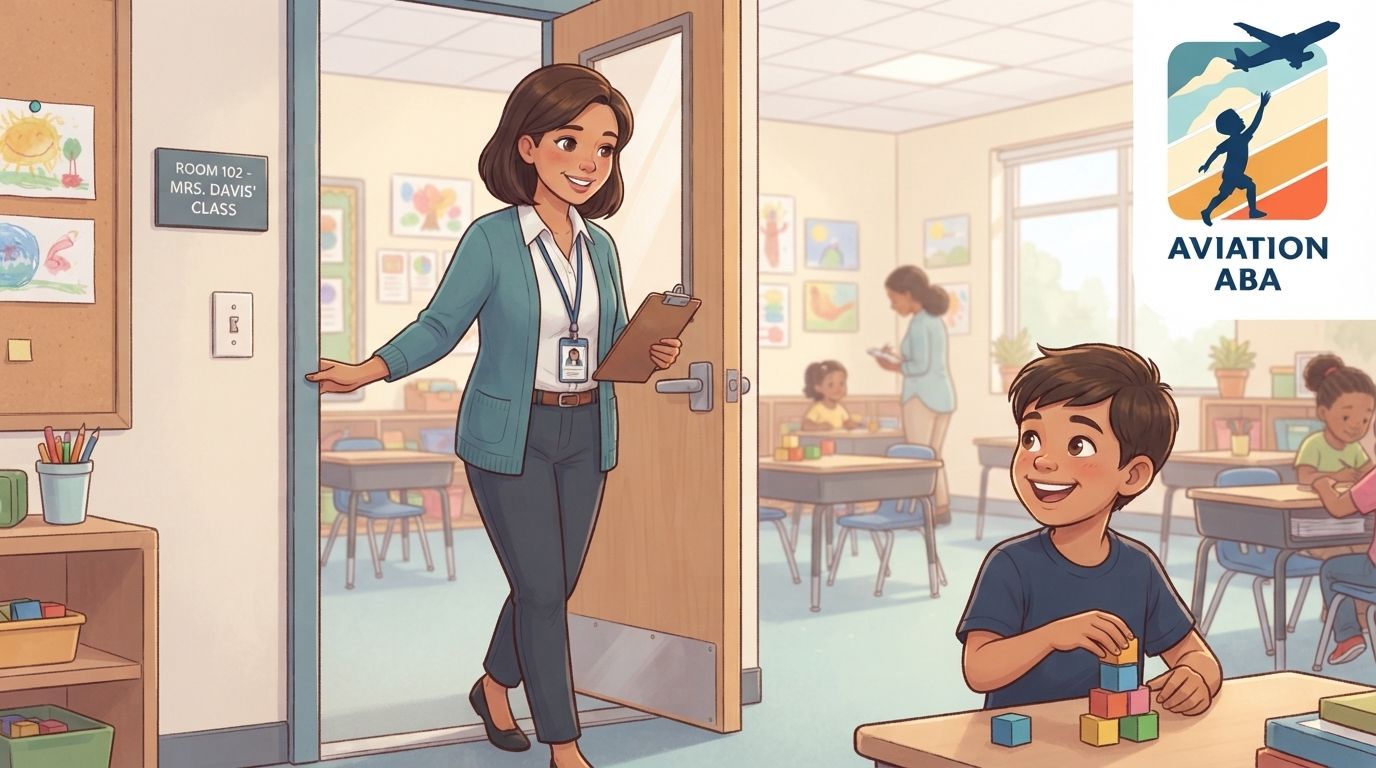
If you’re wondering whether an ABA therapist can come into your child’s public school, the short answer is: sometimes, but it depends on your child’s needs, the Individualized Education Program (IEP), and your school district’s visitor and service policies. Parents can request outside clinical support, but schools also have rules around instruction, privacy, safety, and classroom disruption.
Key Takeaways
- Parents can request that an outside ABA provider observe or support their child at school, especially during the IEP process.
- The school does not always have to allow direct private therapy during the school day, but it should consider requests tied to your child’s educational needs.
- A Board Certified Behavior Analyst (BCBA) may be allowed to observe, consult, or attend IEP meetings even when direct therapy access is limited.
- If access is denied, ask for the reason in writing and request an IEP meeting to discuss next steps.
- Keep the focus on Free Appropriate Public Education (FAPE), your child’s goals, and how ABA support may help the school team understand behavior and learning needs.
What Parents Can Request Under IDEA
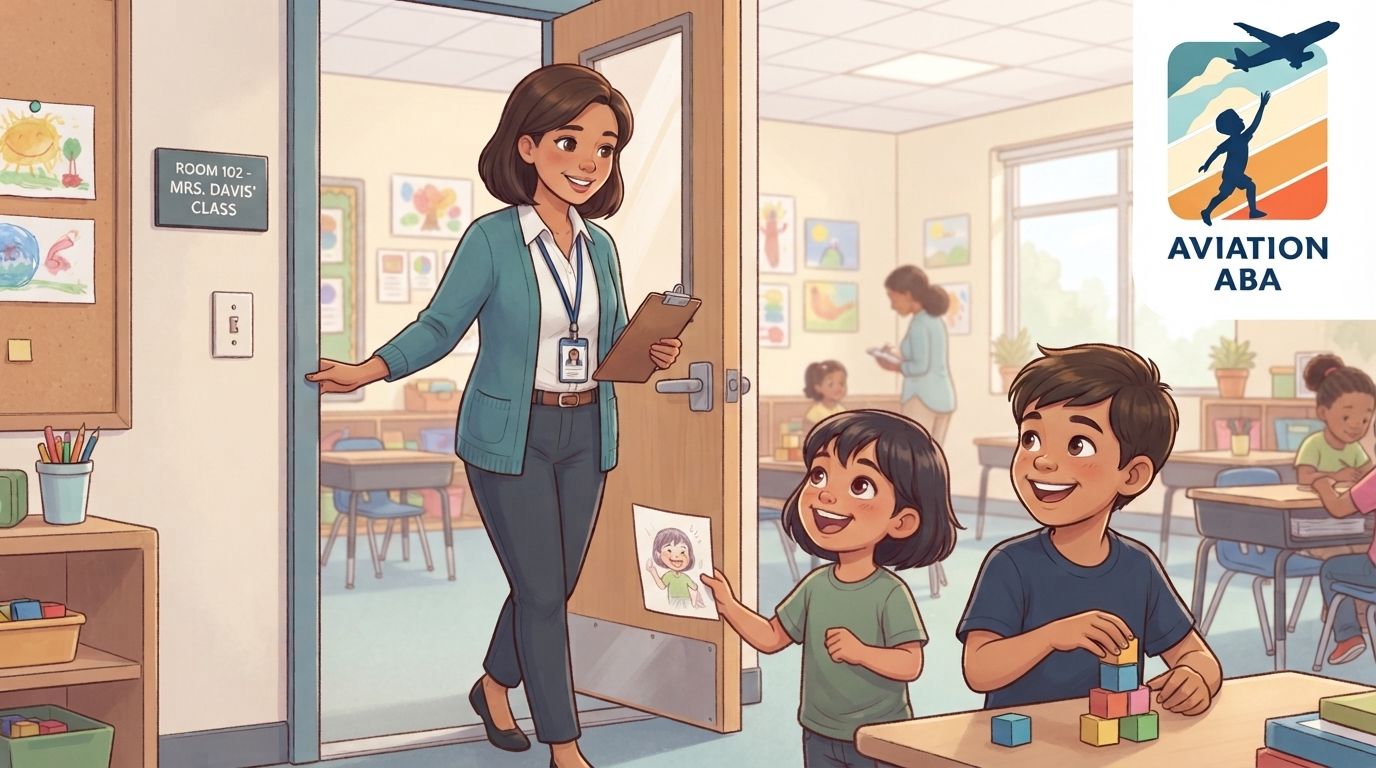
The Individuals with Disabilities Education Act (IDEA) gives parents the right to participate meaningfully in special education decisions. That includes sharing outside evaluations, inviting relevant professionals to IEP meetings, and asking the team to consider clinical recommendations.
Research and school-based practice discussions, including this Merrimack education paper, describe how ABA principles can be used in educational settings when they are connected to student goals and school routines.
If your child already has an IEP, you may also want to review whether ABA can be added to the plan in a way that supports learning, communication, behavior, or independence.
Observation Is Different From Direct Therapy
This distinction matters a lot.
A school may be more open to a BCBA observing your child than to a Registered Behavior Technician (RBT) providing private one-to-one therapy during class. Observation usually means the ABA provider watches routines, gathers information, and gives recommendations. Direct therapy means the provider actively works with your child during the school day.
If you’re trying to understand what support can look like on campus, this guide to school-based ABA can help you compare observation, consultation, and direct support.
How To Request ABA Therapist Access
A calm, written request is often the best first step.
You might write:
“I am requesting permission for my child’s BCBA to observe my child in the school setting and participate in the IEP process. The purpose of this request is to better understand my child’s educational needs and help coordinate supports across home, therapy, and school.”
Then include:
- Your child’s name and school.
- The provider’s name, credentials, and role.
- The reason for the request.
- Whether you are asking for observation, IEP participation, consultation, or direct services.
- Any release forms needed for communication.
For many families, it also helps to learn what school-based ABA may look like before asking the school team for a specific arrangement.
If the School Says No
Schools may say no because of liability, confidentiality, staff contracts, or concerns about classroom disruption. Those concerns are not unusual, but they should be discussed clearly.
You can respond by asking:
- “Can you please provide the denial in writing?”
- “Which district policy applies to outside providers?”
- “Would observation be allowed if direct therapy is not?”
- “Can the BCBA attend the next IEP meeting?”
- “What school-based support will be provided instead?”
If your child’s behavior plan is part of the discussion, understanding the difference between ABA, BIP, and PBIS can make meetings feel a little less overwhelming.
Choosing School Support or Private ABA Support
Private ABA in school is not always the right fit for every child. Sometimes the better path is strong school-based support written into the IEP. Other times, outside observation or consultation helps everyone understand what your child needs.
A helpful decision framework is to ask:
| Question | Why It Matters |
|---|---|
| Is the concern affecting learning or school access? | This connects the request to FAPE. |
| Does the child need clinical ABA, school behavior support, or both? | The supports may overlap, but they are not identical. |
| Can the school team implement the strategies consistently? | Consistency helps routines feel more predictable. |
| Would outside support disrupt instruction? | If yes, observation or consultation may be a better first step. |
| Is the request documented in the IEP process? | Written records help reduce confusion later. |
Discussions of ABA in schools also highlight that collaboration works best when behavior support is connected to real classroom needs, not added as a separate, disconnected service.
Steps To Take When Access Is Denied
If the school refuses access, try to move one step at a time.
- Ask for the denial and policy in writing.
- Request an IEP meeting.
- Bring your outside BCBA, if allowed.
- Share clinical recommendations and school-related concerns.
- Ask what support the school will provide instead.
- Document all emails, meeting notes, and decisions.
- Consider mediation, a state complaint, or due process if the concern continues.
If back-to-school routines are part of the challenge, this guide for autistic children may give you practical ideas to discuss with your team.
What to Do Next?
You do not have to figure this out alone. Start by asking for a written meeting, clarifying whether you want observation or direct therapy, and keeping the conversation focused on your child’s IEP goals.
If your family is exploring school support in Utah, Aviation ABA’s Orem team can help you think through what questions to bring to the school and how ABA support may fit with your child’s day.
References
- National Library of Medicine: Applied Behavior Analysis: Key Points to Improve Autism Treatment
- Pattan.net: Using Applied Behaviour Analysis to Educate Students with Autism in Inclusive Environments

Sarah McConkie is a Board Certified Behavior Analyst and Clinical Director at Aviation ABA with years of experience supporting children and families through individualized ABA therapy. She has worked across multiple clinical settings, conducting behavioral assessments, developing treatment plans, and supervising therapy teams to help children build important everyday skills. Sarah is passionate about creating supportive, relationship-focused care that helps children feel comfortable, confident, and successful in their daily lives.
