


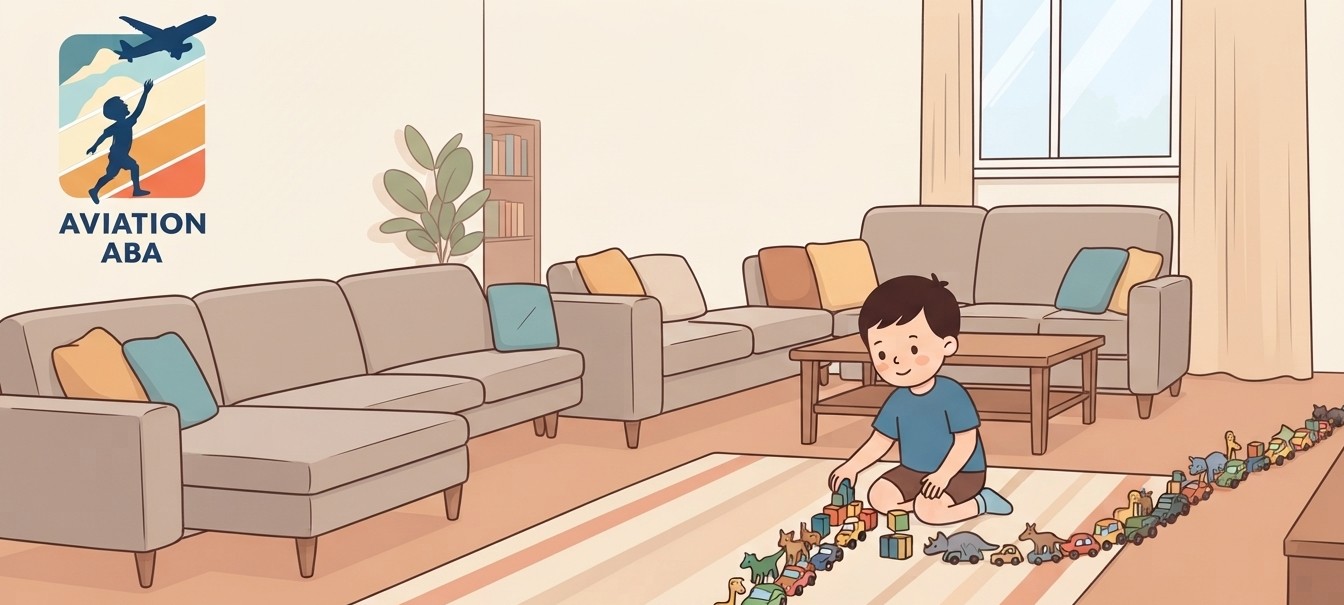
You walk into the living room and find your child completely absorbed. Every red car they own is lined up in one long, careful row, each one spaced just so. They are not playing with the cars the way the box on the shelf suggests, but they are deeply, quietly engaged.
If this looks familiar, you have probably felt a few things at once. Admiration for that level of focus. Curiosity about what is going through their mind. And maybe a quiet question you have not said out loud yet: is this something I should be paying attention to?
Lining up toys is one of the most common play patterns parents notice in autistic children, and it is also one of the most misunderstood. It is not a problem to be corrected. It is a window into how your child organizes and makes sense of the world. This guide breaks down why lining up feels so good to many autistic children, when it is simply play, and when it might be worth a conversation with your child’s therapist or pediatrician.
Key Takeaways
- Autism lining up toys is a very common and repetitve behaviour that provides children with comfort.
- For many autistic children, this play helps them manage sensory overload.
- Repetitive play is not "wrong"; it is an expression of how their unique brain processes the world.
- You can use these interests to build social connection and language skills by joining in and narrating the play.
- Professional support can help guide you and your child towards easier communication and less stress.
What is Autism, Anyway?
Let’s take a moment to clear up any terms. Think of all children like operating systems, and each one has a unique one. Some perceive sensory information, communicate, and understand the world in ways that are different than others. Because their senses are taking in more information than yours, they find comfort in having a routine.
To understand the bigger picture, it really helps to remember that every child is unique, and you should learn about the Autism Spectrum Wheel to know what kind of spectrums there are.
Autism Lining Up Toys and Its Correlation
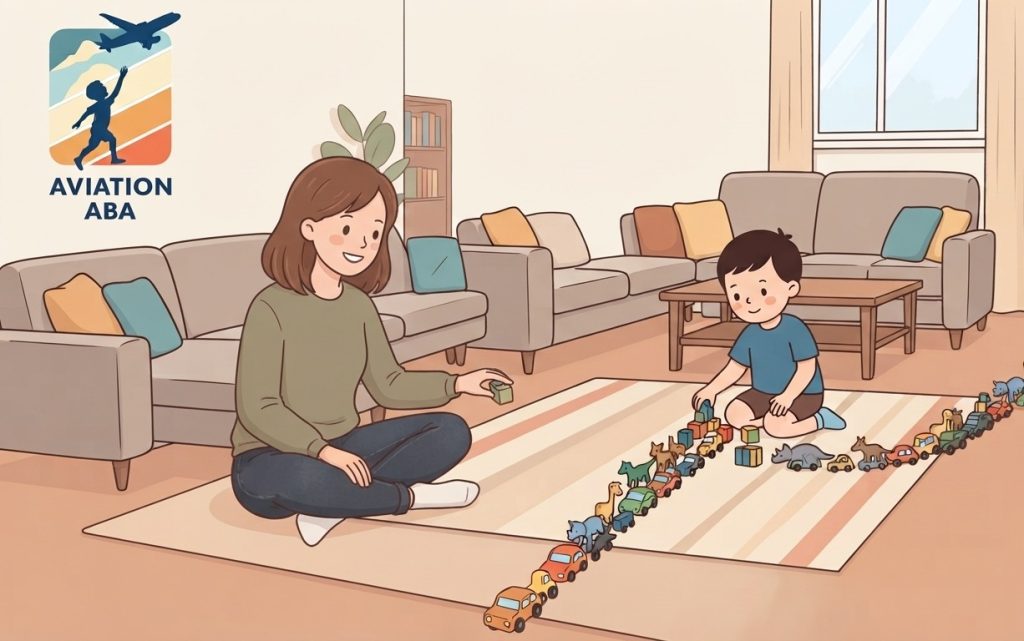
It’s really easy to look at a child lining up toys and think that they’re just being picky. But, for an autistic child, this repetitive behaviour serves several important purposes.
1. Finding Calm in a Chaotic World
The world is sensory-overloading. Lights are bright, sounds are loud, and schedules can change. When an autistic child’s brain feels overwhelmed, they need a way to self-regulate. Lining up toys is a calming activity. It provides a predictable outcome. When the red car follows the blue car every single time, it reduces anxiety.
2. A Need for Sameness and Routine
Remember that children on the spectrum often work really well on rigid routines. If the world changes unexpectedly, it can be really upsetting. By creating a perfect line of toys, the child is creating their own perfect world, as it gives them a sense of control and security.
3. Exploring Details and Patterns
One thing that we all forget is that autistic brains are often detail-oriented. While you might see a whole truck, your child might be fascinated by the texture of the wheels, the shine of the paint, or the way the light reflects off the windshield. Lining them up allows them to study these details and sort items based on their own complex logic.
4. Focusing on One Specific Interest
Many autistic individuals develop really intense interests, and if your child is lining up train engines, then they’re actually engaging into a deep dive into their favourite subject.
It’s really important to recognise that these behaviours often manifest a bit differently depending on where your child might fall on the spectrum. You might see similar patterns in guides for high-functioning autism symptoms, though the intensity and function may vary for children with different levels of support needs, as discussed in resources on low-functioning autism.
Seeking a Diagnosis Without Having True Answers
If you’re ever observing behaviours like lining up toys or rocking and you don’t have answers yet, please don’t worry. You’re not alone in this journey, and you don’t need to carry these questions by yourself. If you suspect that your child might be autistic, then your first step will be to seek guidance from trained professionals who specialise in child development.
If you’re wondering where to start, then you can read our detailed guide on who can diagnose autism to understand the different specialists, from pediatricians to child psychologists, who can provide you with clarity.
How Therapy Can Help Support Your Child
When repetitive behaviors begin to interfere with daily life, learning, or social interaction, many parents look for support. Applied Behavior Analysis (ABA) therapy is often recommended to help autistic children learn new skills and navigate the world.
However, it is crucial to choose a warm, play-based, and human-centered approach to ABA. Modern therapy is all about understanding them and giving them tools to communicate and connect. Remember that some kids would work better with clinic-based ABA therapy, some with in-home ABA therapy, and some with school-based ABA therapy.
Basic Tips for Worried Parents
Instead of trying to stop the lining up of toys, why don’t you try using it as a bridge to connect with them, actually? Like for example:
- Try getting down on their level and joining them on the rug, and just watch what they’re doing.
- If they put down a green block, say, “Green block!” If they connect two trains, say, “Choo-choo! Connected!” You are adding language to their interest.
- Once you have built trust, try adding one block to the end of their line. Wait to see their reaction. If they accept it, you’ve just engaged in a shared activity.
Conclusion
Navigating the days of understanding neurodiversity can feel really overwhelming, especially when you’re trying to decode unique habits like lining up toys. But remember that every single line of cars or precise stack of blocks is simply your child’s way of exploring their world with curiosity and seeking comfort in a loud environment.
You are already taking an amazing step by seeking knowledge and trying to meet them on their terms. And for further assistance, you can contact us!
Resources / Backing Sources:
- ChildMind Institute: How to Help Kids Who Have Trouble Sleeping
- Autism Society: Screening for Common Diagnoses in Autistic Individuals

Sarah McConkie is a Board Certified Behavior Analyst and Clinical Director at Aviation ABA with years of experience supporting children and families through individualized ABA therapy. She has worked across multiple clinical settings, conducting behavioral assessments, developing treatment plans, and supervising therapy teams to help children build important everyday skills. Sarah is passionate about creating supportive, relationship-focused care that helps children feel comfortable, confident, and successful in their daily lives.
